
The Groan You Hear Right Before the Cold Sets In
You pull into the garage after work, hit the remote, and the door doesn't just close — it groans, shudders halfway down, or catches on something in the track before finally dropping shut. Maybe it's been doing that for a couple weeks and you've been telling yourself you'll deal with it later. In Trumbull County, "later" has a way of turning into January, when that same door is fighting ice in the tracks, stiff cold springs, and road salt that's already working its way into every hinge and roller. The twenty minutes you spend now, before the first hard freeze, is a lot cheaper than the service call you'll make once everything is frozen solid.
Fall is the right time for this because it's the last stretch before temperature swings really start punishing a garage door. Warren goes from humid September afternoons to frosty mornings fast, and all that expansion and contraction stresses metal, rubber, and hardware. A door that's a little loose or a little dry in October is a door that's going to struggle in December.
Tools You'll Need
- Work gloves
- A flashlight
- A socket wrench or ratchet set
- Garage door lubricant (silicone-based or a lithium grease made for garage doors — not WD-40, which washes out too fast)
- A clean rag
- A step stool
The 20-Minute Routine
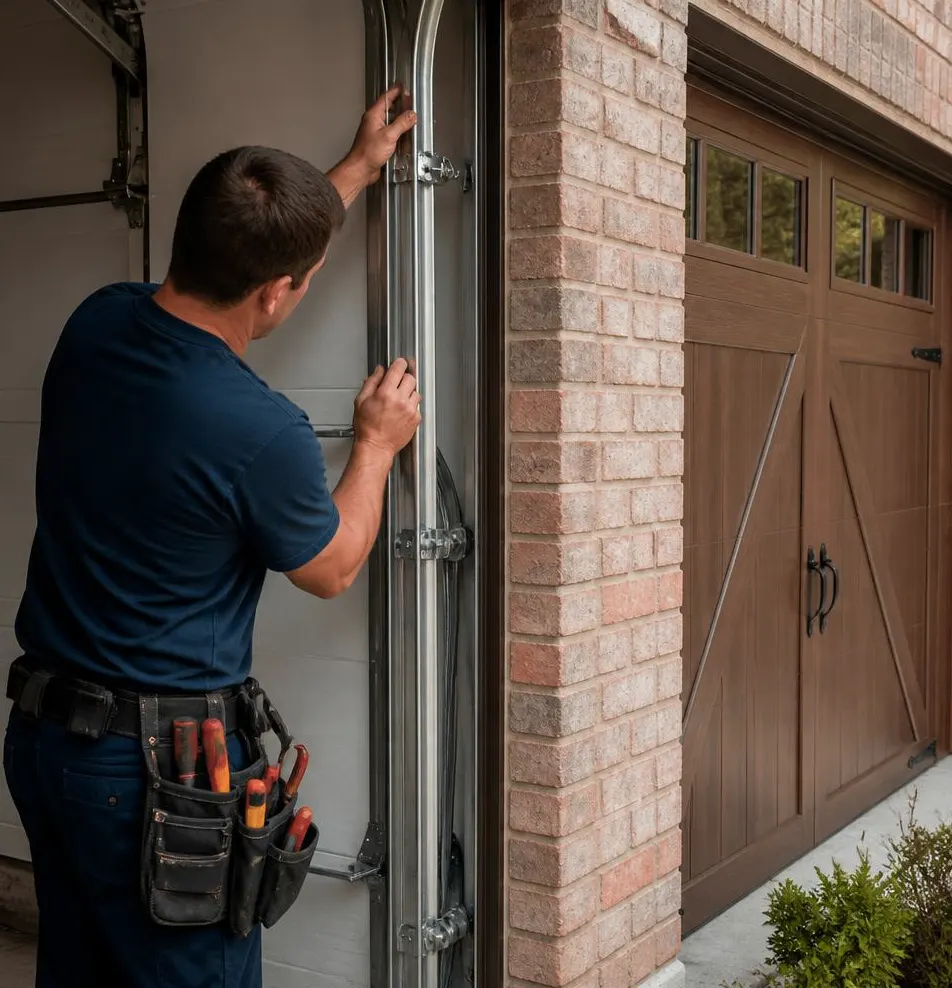
- Look at the tracks first. With the door closed, walk the full length of both tracks with your flashlight. You're looking for dents, rust spots (common after a winter of salt spray from the driveway), or gaps where the track has pulled away from the wall. A track that's slightly bent might still work, but it will wear your rollers unevenly all season.
- Check the rollers and hinges. Open the door partway and watch how the rollers move through the track. They should roll smoothly, not grind, skip, or wobble. Nylon rollers crack over time; steel rollers without bearings get loud. Either one worth noting, but don't pull them yet.
- Lubricate the moving parts. With the door open, apply a light coat of garage door lubricant to the rollers, hinges, and the track itself (a thin line is enough — don't soak it). Wipe off any excess with the rag. This single step is the one most homeowners skip, and it's the one that does the most to prevent the stiff, sluggish movement that shows up once temperatures drop.
- Tighten visible hardware. Using your socket wrench, go over the bolts on the track brackets and the hinges. Vibration from daily opening and closing loosens these gradually, and a wobbly bracket is often the source of a rattling or banging sound. Snug them up — you don't need to crank them past what's comfortable.
- Inspect the weatherstripping. Check the rubber seal along the bottom of the door and the strips along the sides, if your door has them. Look for cracking, flattening, or gaps where daylight shows through. Worn seals let in cold air, moisture, and small animals looking for a winter spot — all things you'd rather not deal with in a Warren winter.
- Test the auto-reverse safety feature. Place a 2x4 flat on the ground where the door closes. Run the door down and confirm it reverses when it touches the board. Then test the photo-eye sensors near the bottom of the tracks by waving a hand or broom through the beam while the door is closing — it should stop and reverse. If either test fails, stop using the opener until it's fixed; this is a safety issue, not a cosmetic one.
- Watch the door's balance. Disconnect the opener (pull the release cord) and manually lift the door about halfway. Let go. A properly balanced door will stay in place. If it drifts down or shoots up, the spring tension is off.
Where the Line Is: DIY vs. Technician
Everything above is safe for a homeowner to handle with basic tools. What you should not touch is anything involving the springs, cables, or the opener's internal wiring. Garage door springs hold an enormous amount of tension — enough to cause serious injury if they let go while you're working near them. If your balance test showed the door drifting, or if you noticed visible wear, gaps, or rust on the springs themselves, that's a job for a trained technician, not a weekend project.
The same goes for bent tracks that need realignment, cables that look frayed, or an opener that's making electrical or grinding noises from inside the unit. Those jobs require the right tools, tension gauges, and experience to do safely — guessing can make the problem worse or damage the opener motor entirely.
When to Call Warren Garage Door Pro
If your twenty-minute check turns up a door that won't stay balanced, springs that look stretched or rusted, or an auto-reverse feature that doesn't trigger, it's time to call in a technician rather than push through the season hoping it holds. Warren Garage Door Pro handles spring replacement safely with the right tension tools, and offers full garage door maintenance visits that go beyond what you can do yourself — adjusting opener force settings, checking cable wear, and realigning tracks before winter ice makes small issues a lot bigger.
If you're in Warren, Niles, Howland, Cortland, Champion, Lordstown, Leavittsburg, or Youngstown and your garage door is groaning its way into fall, give Warren Garage Door Pro a call before the first freeze locks things in place. A quick visit now beats a stuck door on a ten-degree morning.